Blog > Windermere FL Home Values: The 34786 Wealth & Equity Report
The 34786 Authority Report: Navigation
- Why 34786 Commands Central Florida's Highest Values
- The Three Distinct Windermere Market Segments
- The Gated Community Decision: ROI and HOAs
- Lakefront vs. Lake Access: The Hidden Cost Reality
- The School Zone Verification Process
- Timing Your Purchase: When Leverage Peaks
- Top Windermere Communities Compared
Why Windermere 34786 Commands Central Florida's Highest Home Values
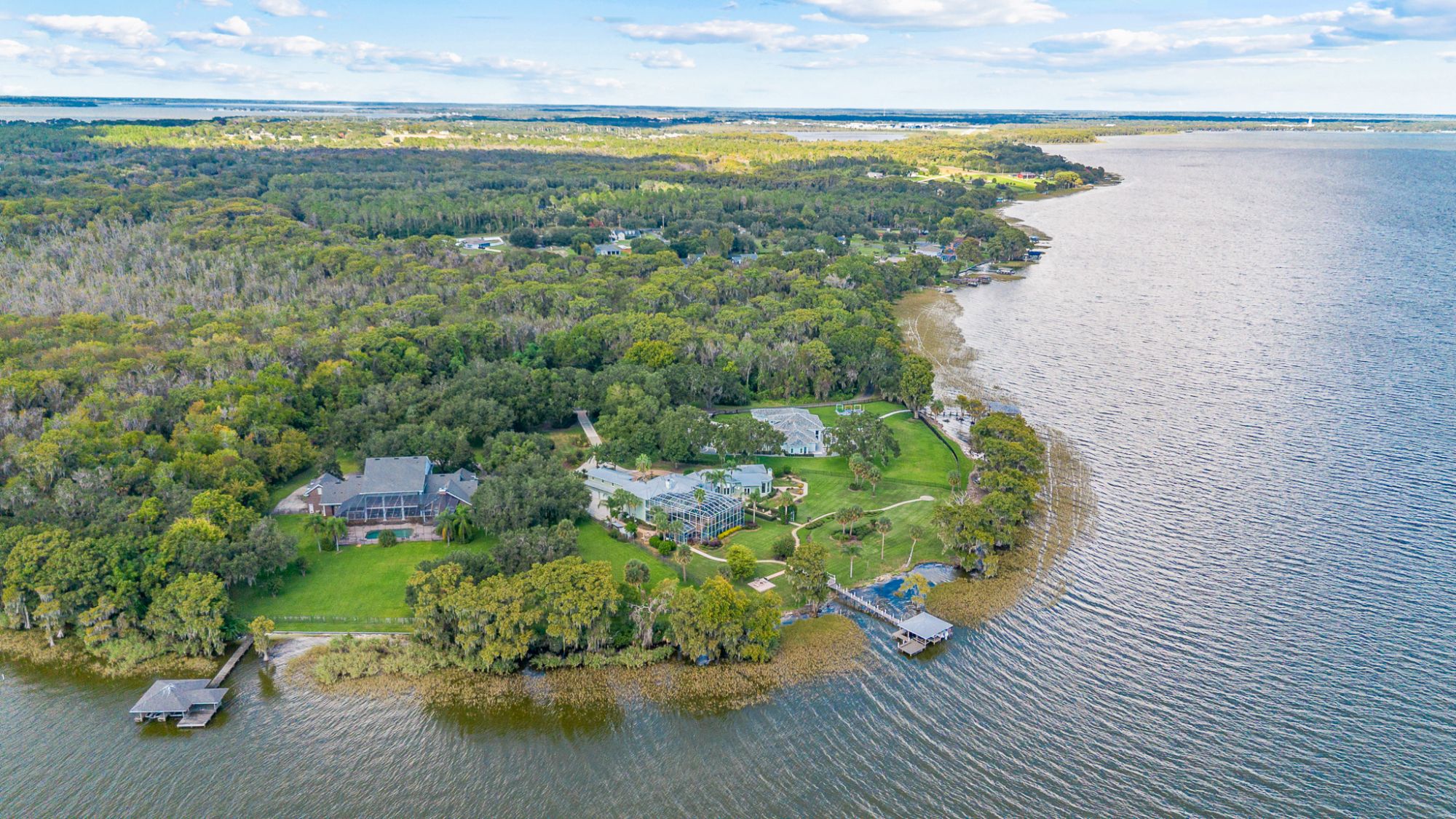
Windermere's 34786 ZIP code represents Central Florida's most coveted residential address because it combines three irreplaceable assets: direct access to the Butler Chain of Lakes, some of Florida's top-rated public schools, and a tax structure that benefits high-income residents through zero state income tax. The median home value in this market ranges from $690,000 to $900,000 based on 646 total sales in 2025, with the ultra-luxury segment ($3M+) operating in what I call a perpetual seller's market where scarcity consistently overrides economic conditions.
After working with dozens of families relocating to this market, I've observed that Windermere operates fundamentally differently than the broader Orlando metro. While typical Orlando neighborhoods respond predictably to mortgage rate fluctuations, Windermere's luxury segment remains insulated—40 to 50 percent of buyers in the $1M+ range pay cash, many bringing equity from home sales in New York or California where median prices reach $875,000 and $950,000 respectively. For these buyers, a $900,000 Windermere estate feels like a strategic value play rather than a stretch.
The town itself sits 14 miles southwest of downtown Orlando, positioned to offer the rare combination of genuine small-town character and proximity to major employment centers. My clients consistently tell me they chose Windermere over competing luxury markets like Lake Nona or Winter Park because of the water access, the mature landscaping featuring 30 to 50-year-old oak canopies that simply cannot be replicated in newer developments, and the established community feel that took decades to cultivate.
Understanding Windermere's Three Distinct Market Segments
Windermere doesn't operate as a single market—it functions as three separate sub-markets with different dynamics, buyer profiles, and negotiation realities. Understanding which segment you're entering fundamentally changes your strategy. The entry-luxury segment spans $700,000 to $1.5 million and represents approximately 60 percent of available inventory. This tier remains rate-sensitive, meaning mortgage rate movements directly impact buyer behavior and negotiation leverage. Entering 2026, this segment shows a soft buyer's market forming with increasing inventory and greater negotiation opportunities.
The premium segment, ranging from $1.5 million to $3 million, operates in a balanced market where school zone boundaries drive pricing more than any other factor. A home in the Windermere Elementary zone commands an 8 to 15 percent premium over comparable properties zoned to adjacent schools. I've watched clients pay $150,000 to $220,000 more for essentially identical floor plans simply because one property sits on the correct side of a school boundary line.
The ultra-luxury segment above $3 million functions in a perpetual seller's market regardless of broader economic conditions. With only 10 to 15 active listings at any given time and 40 to 50 percent of buyers paying cash, this segment responds to scarcity rather than mortgage rates or economic headlines. The top 10 luxury sales in 2025 averaged a 93.2 percent list-to-sale ratio, ranging from 87 to 100 percent of asking price.
The Gated Community Decision: What Your HOA Dollars Actually Buy
Gated communities in Windermere command a 12 to 18 percent resale premium, but the value proposition extends far beyond perceived security. Windermere's overall crime rate already sits 68 percent below the Florida average, so the security gate isn't providing meaningful protection—it's providing something more valuable: lifestyle curation and aesthetic enforcement through architectural review boards that maintain property standards across the community.
The three highest-appreciation communities from 2015 to 2025 were all gated: Isleworth at 127 percent appreciation, Keene's Pointe at 94 percent, and Lake Butler Sound at 88 percent. The premium these communities command reflects both the controlled environment and the inventory scarcity—Isleworth houses approximately 900 residents total, and Lake Butler Sound contains just 211 homes. When inventory this limited appears on the market, auction dynamics emerge.
HOA fees across Windermere's gated communities range from $1,840 annually at Estates at Windermere to $9,600 or more at Isleworth, where club membership includes golf access. When I guide clients through this calculation, I focus on amenity utilization rate: if you'll use the pool, fitness center, or golf course two or more times weekly, the fees represent reasonable value. Using facilities less than once monthly means you're subsidizing amenities you'll never touch.
For families maximizing budget, non-gated neighborhoods like Estates at Windermere at $460 quarterly versus $500 or more monthly for gated alternatives free up $3,000 to $4,000 annually that can compound in college savings accounts while still delivering Windermere Elementary school zoning and the Windermere address.
Lakefront Versus Lake Access: The Hidden Cost Reality
Butler Chain lakefront properties command a 50 to 120 percent premium over comparable non-water homes, but the true cost of ownership extends far beyond the purchase price. Direct lakefront buyers should budget $15,000 to $50,000 per decade for seawall maintenance, $5,000 to $15,000 for dock permitting and construction, and $1,000 to $3,000 annually in additional insurance riders. I've seen first-time lakefront buyers blindsided by a $35,000 seawall repair bill within their first two years of ownership.
The honest calculation I run with clients examines actual usage patterns. Survey data from lakefront owners shows median usage of 18 days per year—far below the 50 or more days most buyers anticipate at purchase. At a $500,000 premium amortized over 10 years, that's roughly $2,800 per use before accounting for maintenance. Unless you're genuinely committed to 30 or more days of annual boating and watersports, the mathematics favor lake access communities.
Lake access communities like Keene's Pointe deliver approximately 80 percent of the lifestyle benefit at 40 percent of the cost. The Golden Bear Club offers pool facilities overlooking the Butler Chain, and the community provides shared dock access and boat ramps. Residents enjoy the water views and recreational access without the seawall obligations or dock maintenance headaches. For clients who picture themselves on the water monthly rather than weekly, this represents the sweet spot.
That said, lakefront properties possess an irreplaceable liquidity advantage: they always have buyers, even in downturns. With only 43 lakefront lots in Lake Butler Sound and minimal turnover, scarcity creates auction dynamics that protect values regardless of broader market conditions. For clients with the budget and genuine water lifestyle commitment, lakefront remains the ultimate Windermere investment.
The School Zone Verification Process That Protects Your Investment
Windermere Elementary carries a perfect 10/10 rating from GreatSchools, ranks 50th among 2,258 Florida elementary schools, and demonstrates 82 to 95 percent proficiency in ELA and Math versus 56 to 64 percent district and state averages. The median home value within the Windermere Elementary zone reaches $1,201,745—and the premium exists because 67 percent of buyers make a critical mistake: relying on Zillow or Realtor.com for school assignments when these platforms use ZIP-level approximations rather than parcel-specific boundaries.
Some streets within the same subdivision are zoned to different schools. I've watched buyers assume they're purchasing in the Windermere Elementary zone only to discover during due diligence that their specific lot sits just outside the boundary. The value delta on comparable homes can reach $150,000 to $220,000—a swing that dwarfs typical negotiation margins.
The verification process I recommend includes four steps: use the Orange County Public Schools "Find Your School" tool with the exact street address, cross-reference with the community plat map since some HOAs span multiple school zones, request the seller's most recent school assignment letter as official documentation, and confirm with your agent that redistricting hasn't changed boundaries since the tool was last updated.
A critical risk factor looms for 2026-2027: the proposed relief high school north of Lake Buena Vista will redraw Windermere High attendance zones. Neighborhoods most at risk include Summerport, Independence, and Palms at Windermere—the newest growth areas likely shifted to relieve capacity. Before purchasing in growth corridors, confirm with Orange County Public Schools long-term facility plans to understand potential redistricting exposure.
Timing Your Purchase: When Negotiation Leverage Peaks
Winter purchases between December and February deliver the highest average discounts at 4.2 percent, while spring listings from March through May see only 1.2 percent average discounts with 68 percent of properties receiving multiple offers. That 3 percentage point delta on a $900,000 home represents $27,000 in savings—meaningful capital that compounds over a 10-year hold.
September through November represents my recommended purchase window for clients with timeline flexibility. Inventory remains healthy from spring carryover, competition has evaporated since school has started and hurricane season creates buyer hesitation, and sellers who listed in spring now sit six months into their sale process showing motivated pricing. Multiple offer probability drops to 27 percent and average discounts reach 3.4 percent.
For 2026 specifically, mortgage rates appear stable in the low-6 percent range based on Federal Reserve projections. Spring inventory should reach pre-pandemic levels of 320 to 350 active listings versus approximately 215 currently—14 percent more selection. Price trajectory for Windermere shows flat to negative 2 percent while the broader Orlando metro projects negative 3 to 5 percent, demonstrating the luxury market's insulation from general corrections.
Never wait if targeting lakefront or ultra-luxury inventory. Butler Chain frontage represents less than 1 percent of total inventory with average gaps of 6 to 18 months between comparable listings. The "waiting for a crash" mentality overlooks Windermere's structural differences: the 40 to 50 percent cash buyer concentration, limited inventory, and perpetual demand from out-of-state relocators prevent 2008-style collapses. Realistic scenario: 3 to 8 percent price moderation over 2 to 3 years, not the 30 to 40 percent correction some buyers await.
The Complete Cost Picture: What Ownership Actually Requires
For a $900,000 home purchase with 20 percent down at current 6.25 percent rates, total monthly housing costs range from $6,123 to $7,098 including principal and interest at $4,432, property taxes at $1,125 to $1,350 monthly, homeowner's insurance at $416 to $666 monthly, and HOA dues ranging from $150 to $500 monthly. When you add utilities, maintenance reserves, landscaping, and pool service, total monthly outlay reaches $7,263 to $9,226.
Property taxes require careful calculation. The formula multiplies taxable value (assessed value minus homestead exemption) by the millage rate divided by 1,000. For a $900,000 primary residence, the $50,000 homestead exemption yields an $850,000 taxable value. Combined millage rates including Windermere town, Orange County, school district, and special districts total approximately 21 mills, producing an annual tax obligation of roughly $17,850 or $1,488 monthly.
Florida homeowner's insurance has stabilized somewhat in 2026 following tort reform, with some carriers reducing rates 5 to 8 percent. However, premiums remain substantial: a $900,000 Windermere home typically carries $5,400 to $7,200 in annual insurance costs. The hurricane deductible deserves special attention—separate from your standard deductible, it's typically 2 to 10 percent of dwelling coverage. A 5 percent hurricane deductible on a $900,000 home means $45,000 out-of-pocket before insurance pays for hurricane damage.
Upfront costs catch many buyers off guard. Beyond the $180,000 down payment at 20 percent, expect $18,000 to $45,000 in closing costs including loan origination, appraisal, inspection, title insurance, and escrow funds. Add move-in costs and immediate repairs based on inspection negotiations, and total upfront capital requirements reach $203,000 to $270,000—23 to 30 percent of purchase price.
<img style="width: 100%; height: auto;" src="https://cdn.lofty.com/image/fs/313833365820667/website/22694/cmsbuild/2026127_0d1cf41fd6134515.jpeg" alt="2026 Interior luxury home design in Windermere 34786 estates"" loading="lazy" />
The Inspection Contingency: A Non-Negotiable Protection
Never waive home inspection in Florida regardless of multiple offer pressure. Florida homes carry unique climate-related risks that create catastrophic exposure: hidden mold from high humidity requires $5,000 to $30,000 remediation, subterranean termites are ubiquitous with active infestations costing $3,000 to $15,000 for treatment plus structural repair, and older homes may contain Federal Pacific or Zinsco electrical panels that present fire hazards and insurance coverage barriers.
Thirty-six percent of Windermere listings experience price cuts due to deferred maintenance uncovered during inspection. The most common issues include HVAC units 16 or more years old requiring immediate replacement, roofs 20 or more years old that insurance companies now refuse to cover until replaced, pool equipment failures, and electrical panel upgrades needed for insurance compliance.
The strategic compromise for competitive situations shortens the inspection period from standard 10 days to 7 days, demonstrating seriousness while preserving protection. Consider an "inspection for information only" approach: agree to accept the property as-is for items under $5,000 while negotiating only major defects exceeding that threshold. This positions your offer competitively while maintaining walk-away rights for true deal-breakers like foundation issues, active termite infestation, or roof failure.
Four-point inspection has become critical for homes 15 or more years old. Lenders and insurance companies now require this specialized inspection covering HVAC, electrical, plumbing, and roof for homes built before 2010. At $150 to $250 beyond standard inspection cost, it identifies insurance deal-breakers before you're committed—some insurers refuse homes with roofs 20 or more years old or certain electrical panel types.
Commute Realities: Rush Hour Truth Versus Google Maps Fiction
Google Maps shows ideal off-peak times that bear little resemblance to actual rush hour conditions. The Windermere to downtown Orlando corridor shows 20 to 25 minutes in Google Maps but requires 35 to 55 minutes during 7 to 9 AM and 4 to 6 PM rush periods via the FL-408 toll road. Annual toll costs for this commute run $1,250 to $1,750 at $5 to $7 daily across 250 work days.
The Windermere to Dr. Phillips corridor presents the worst traffic friction. While Google suggests 10 to 15 minutes off-peak, rush hour extends to 25 to 45 minutes due to gridlock at the Sand Lake and Turkey Lake Road intersection—one of Orlando's five worst intersections rated F for traffic flow. The bypass route via Apopka-Vineland Road or Winter Garden-Vineland Road adds 5 minutes in distance but saves 15 to 20 minutes by avoiding the gridlock.
Theme park commuters benefit from Windermere's positioning: Walt Disney World sits 13 to 15 miles away, requiring 15 to 25 minutes off-peak via the Western Way back entrance. The recently upgraded Ficquette Road, completed in 2025-2026, shaves 5 to 8 minutes off peak commutes for Independence, Summerlake, and Palms at Windermere residents. Cast member shift changes at 6 to 8 AM and 2 to 4 PM create surges, but avoiding I-4 entirely makes this commute manageable.
For airport commuters to Orlando International, budget 30 to 40 minutes via FL-417 during typical conditions. The unavoidable toll costs $8 to $12 daily each way, producing annual toll expenses of $2,000 to $3,000 for daily commuters—a factor worth including in employment negotiations for airport-based positions.
Cash Versus Financed: The Calculation Most Buyers Get Wrong
Cash buyers represent 40 to 50 percent of Windermere's luxury market above $1 million, but the decision between cash and financing involves opportunity cost calculations that cut both ways. Cash offers 10 to 14 day closes versus 30 to 45 days financed, 2 to 5 percent stronger negotiating position from seller certainty, and zero appraisal risk since you're not dependent on a third party valuation matching your contract price.
Financing offers advantages that sophisticated buyers often overlook. Appraisal contingency protection means if the home appraises $50,000 below contract, you can renegotiate or walk. Cash buyers have no such recourse unless they add a specific Addendum F appraisal contingency rider. Liquidity preservation keeps $700,000 accessible for medical needs, business opportunities, or children's education rather than locked in illiquid real estate.
The opportunity cost mathematics favor financing for many high-income buyers. At a 6 percent mortgage versus historical 7 to 8 percent stock market returns, financing proves math-positive long-term. A $700,000 cash purchase foregoes roughly $42,000 to $56,000 in annual investment returns. Over a 10-year hold, that compounds to $420,000 to $560,000 in opportunity cost—often exceeding the total interest paid on a mortgage.
My recommended hybrid strategy: 50 to 60 percent down payment plus financing the balance. This shows strong financial position while preserving $300,000 to $400,000 in liquidity. Combined with waiving appraisal contingency for confident pricing situations, this approach competes effectively with cash offers while maintaining financial flexibility.
Relocating Buyers: Avoiding the Out-of-State Premium
Out-of-state buyers overpay 3 to 8 percent versus locals on average due to urgency-driven decisions, comparison bias, and micro-market unfamiliarity. Job relocation timelines force rushed 30 to 60 day purchase windows. New York buyers paying $875,000 median prices or California buyers at $950,000 median experience Windermere's $900,000 asking prices as "steals" without understanding that local comparable analysis might support $850,000 fair value.
The deeper issue involves micro-market knowledge that takes years to accumulate. Locals know that lakefront in Butler Bay sells $100,000 below comparable lakefront in Lake Butler Sound despite similar water access and home specifications—the community cache differential creates real value gaps invisible to outsiders. They know which Keene's Pointe villages have golf course views versus conservation buffer zones, a 6 to 10 percent price delta for identical square footage.
Mitigation strategies for relocating buyers start with agent selection: hire a buyer's agent with 10 or more years of Windermere-specific experience, not an Orlando generalist. Request a Comparative Market Analysis for each shortlist property before making offers—not aggregate market reports, but property-specific comps within 0.5-mile radius. Make a 3 to 5 day research trip to test drive commutes during actual rush hours, attend community events, and tour 10 to 15 homes across price and neighborhood types.
Join Windermere Facebook groups and Nextdoor 3 to 6 months before your move and simply observe. Lurk to learn micro-market nuances, HOA conflicts, infrastructure issues, and neighbor dynamics. The insights from six months of passive community observation often prevent six-figure pricing mistakes.
Top Windermere Communities: A Direct Comparison
Lake Butler Sound represents Windermere's crown jewel: 211 homes with prices ranging from $3 million to $12 million, guard-gated security, Windermere Elementary zoning, and 43 direct Butler Chain lakefront lots. The community appreciation from 2015 to 2025 reached 88 percent. Monthly HOA fees run $300 to $500 covering gate staffing, Cartmel Gardens landscaping, and common area maintenance. This is the market's most exclusive enclave, and inventory appears sporadically—average wait time for comparable lakefront listings spans 6 to 18 months.
Keene's Pointe offers the largest gated community at 18 villages with over 1,000 homes ranging from $600,000 to $1.5 million. The Golden Bear Club provides optional membership with golf, pool, and Butler Chain boardwalk access. The community feeds to Keene's Crossing Elementary, also rated 10/10, making this an excellent family option. Individual village positioning matters significantly: Grosvenor Pointe and Northshore command premiums for golf views and direct lake access, while interior villages like Cambridge offer entry pricing with full amenity access.
Butler Bay delivers entry-point luxury at $600,000 to $1.5 million with annual HOA fees of just $1,436 covering gate, tennis, park, and playground. The community sits on a former golf course with some lakefront lots on Lake Crescent and Lake Roberts. Windermere Elementary zoning, gated security, and relatively modest fees make this an ideal option for families maximizing budget while maintaining premium positioning.
Estates at Windermere provides the best value proposition for buyers prioritizing school zoning over amenities: non-gated single-family homes from $500,000 to $900,000 with quarterly HOA fees of just $460. Full Windermere Elementary zoning means families secure the school advantage without gated community premiums. The savings versus gated alternatives—$3,000 to $4,000 annually—compound meaningfully over a typical 7 to 10 year ownership period.
Deal Failure Prevention: The Five Scenarios That Kill Transactions
Financing failures terminate 20 to 30 percent of failed deals, with job changes during the contract period representing the leading cause. Switching employers even for a better opportunity during your purchase timeline creates underwriting chaos—new employer probation periods mean insufficient income history for lender approval. The prevention is straightforward: make absolutely zero financial changes during the contract period. No new credit cards, no car loans, no job switches, no major purchases.
Low appraisals catch buyers off guard when they don't understand Florida's financing contingency structure. Standard Florida contracts use financing contingency rather than standalone appraisal protection. If your home appraises $50,000 below contract, you must cover the gap unless your lender denies the loan entirely—you can't simply walk away. Adding Addendum F creates explicit appraisal contingency with walk-away rights regardless of loan status.
Title problems affect 5 to 10 percent of transactions, typically from outstanding liens including mechanics liens, HOA special assessments, or unpaid property taxes. Unresolved estate issues where sellers inherited property but the estate hasn't fully settled create delays that can extend closings by months. The prevention requires ordering title search on day one of contract to maximize resolution time.
Inspection-related failures peak at 15 to 20 percent, usually from foundation issues, roof replacement needs, or insurance coverage barriers from four-point inspection failures. The budget protection: set aside 3 to 5 percent of purchase price for repairs and deferred maintenance regardless of seller credits. Get insurance quotes during the inspection period rather than after to confirm insurability before you're committed.
Buyer remorse drives 10 to 15 percent of failures when buyers discover HOA restrictions too onerous, commute realities worse than expected, or market shifts during the contract period trigger cold feet. Prevention starts with due diligence timing: review HOA documents including CCRs, bylaws, and rules before making offers—not after. Test drive commutes during actual work hours, not Saturday mornings. Lock mortgage rates at pre-approval to insulate from rate spikes during the contract period.
Your Next Steps Toward Windermere Ownership
The Windermere purchase decision involves more variables than typical real estate transactions precisely because the stakes are higher. You're not just buying shelter—you're positioning your family within specific school boundaries, committing to HOA governance structures that will shape your daily life, and allocating capital that represents years of accumulated wealth. The process rewards thorough preparation and punishes assumption.
Start with honest assessment of your priorities: Is school zoning non-negotiable or merely preferred? Will you genuinely use lake access frequently enough to justify the premium? Does your timeline allow waiting for optimal seasonal negotiation windows, or do external factors mandate faster action? The answers shape which communities fit your situation and which represent expensive mismatches.
Windermere's market rewards informed buyers who understand its segmented structure, respect the micro-market nuances that create real value differentials between superficially similar properties, and approach the transaction with realistic expectations about timelines and costs. The premium you pay for Windermere reflects genuine value in school quality, lifestyle amenities, and appreciation potential—but only when you purchase the right property in the right community at the right price for your specific situation.

Meet Andy Neal
Luxury Listing Specialist | The Agency Orlando
With over $1 Billion in global sales and 25 years of specialized experience, Andy Neal is the authority on Windermere’s gated enclaves. His "math-first" approach to the 34786 market ensures that families moving to neighborhoods like the Estates protect their equity while securing the lifestyle they deserve.
- 🏆 Top 100 Orlando Realtor
- 📍 Estates Specialist
- 🌎 Global Exposure